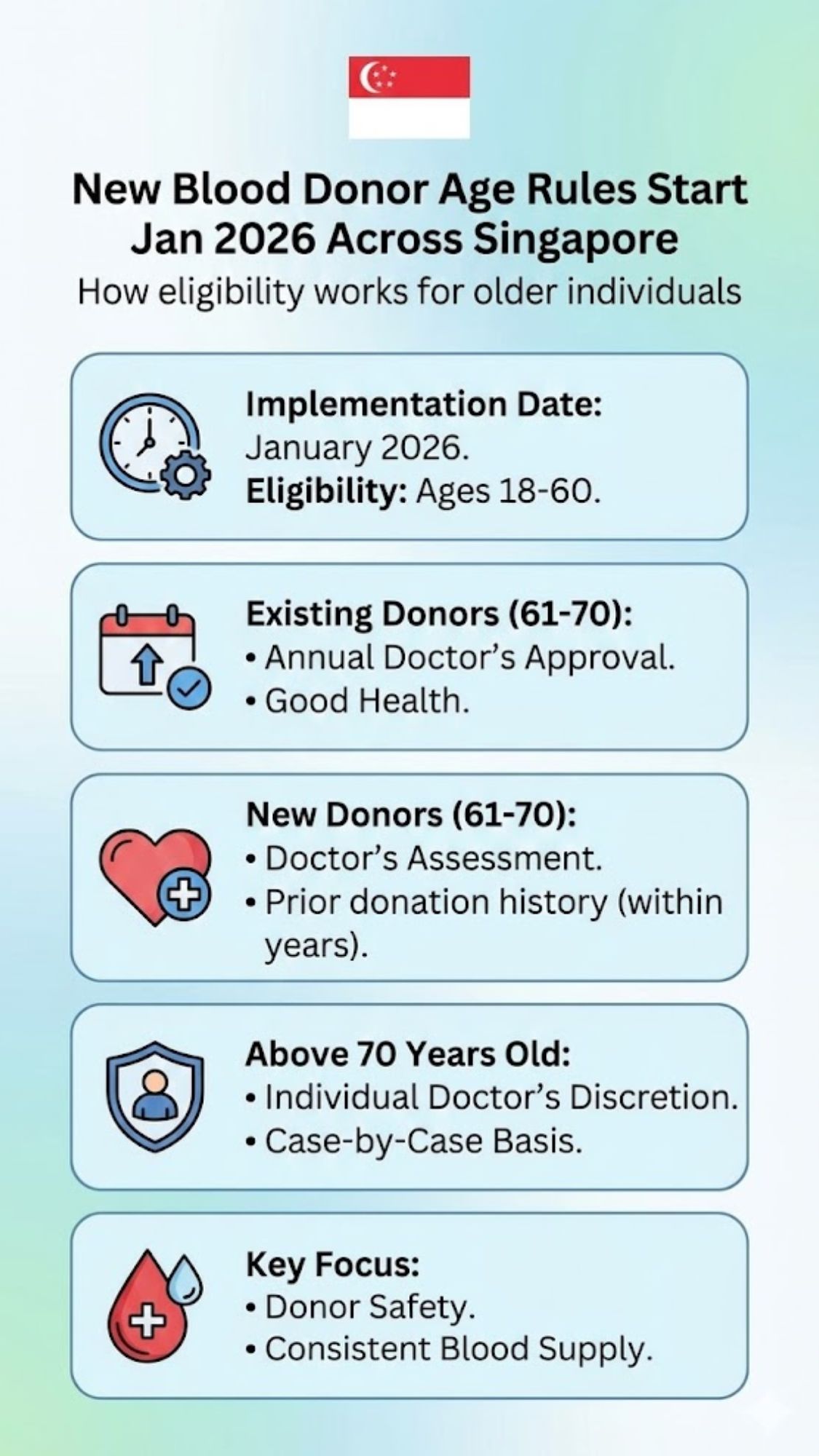
Good news. Starting January 2 Singapore is raising the maximum age for first-time blood donors from 60 to 65 years old. This change is important if you wanted to donate blood before but were too old under the previous rules. The update happens because Singapore has an aging population and needs more blood supply. The shortage gets worse during busy travel periods like the end of the year.
Why Authorities Decided to Increase the Age Limit
The decision to raise the donor age limit is based on more than simple statistics. Health officials observed that first-time donors up to the age of 60 experienced fewer adverse reactions as they got older. These findings align closely with international research.
Extending the upper age limit to 65 does not introduce additional safety risks. Instead, it opens the door to thousands of new potential donors at a time when Singapore’s blood supply needs reinforcement.
 Big Changes Ahead: Mandatory New Documents for SASSA Grant Payments Starting 7 January 2026
With younger donor numbers declining and an ageing population requiring more medical care, expanding the donor pool has become a necessity rather than a choice.
Can You Donate If You Have High Blood Pressure or Diabetes?
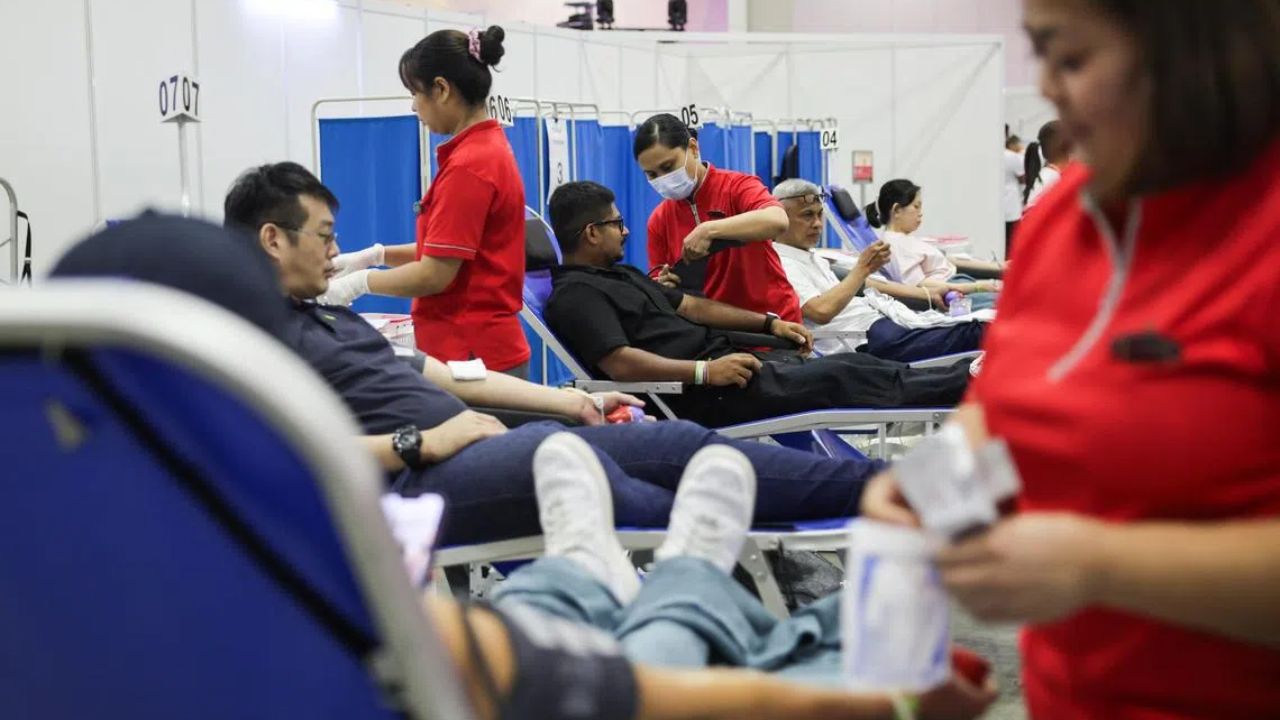
You do not need to be in perfect health to qualify as a blood donor. Many individuals with managed medical conditions may still be eligible.
You may be able to donate if:
– High blood pressure is well controlled with no more than two medications
– Diabetes is managed without the use of insulin
– There are no complications linked to existing chronic conditions
Minimum haemoglobin requirements still apply:
– Women: 12.5 g/dL
– Men: 13 g/dL
 Cash Payout Up to S$600 Starts in Singapore — Check How eligibility checks shape who gets paid
If you are uncertain about your eligibility, an online assessment is available before scheduling an appointment, making the process simple and stress-free.
Why Year-End Blood Shortages Remain a Concern
Blood donations in Singapore consistently decline toward the end of the year, with collections dropping by as much as 20 percent.
This happens for several reasons:
– Many residents travel during the holiday season
– Travel can temporarily disqualify individuals from donating
– Certain blood types reach critical levels quickly
Travel to regions affected by insect-borne diseases can result in a deferral period of up to four months after returning. Because of this, authorities are encouraging eligible donors to act early, before supplies fall to unsafe levels.
Singapore must maintain a minimum blood reserve of nine days at all times, as medical emergencies can arise without warning.
Is Now a Good Time to Donate?
For most eligible Singaporeans, the answer is yes. A single blood donation has the potential to support up to three patients in need.
As the population continues to age, every additional donor plays an important role. For healthy individuals aged between 60 and 65, this expanded eligibility period offers a timely opportunity to contribute.