Singapore is preparing for a major shift in how road users pay congestion charges, as the city-state moves fully away from cash-based toll payments. From 8 January 2026, the new generation Electronic Road Pricing (ERP) system will take effect nationwide, marking a significant change for drivers across the country. The transition is designed to streamline traffic management, reduce congestion more precisely, and modernise payment collection. For motorists, this change means adapting to a fully digital system that relies on in-vehicle technology rather than physical cash transactions.
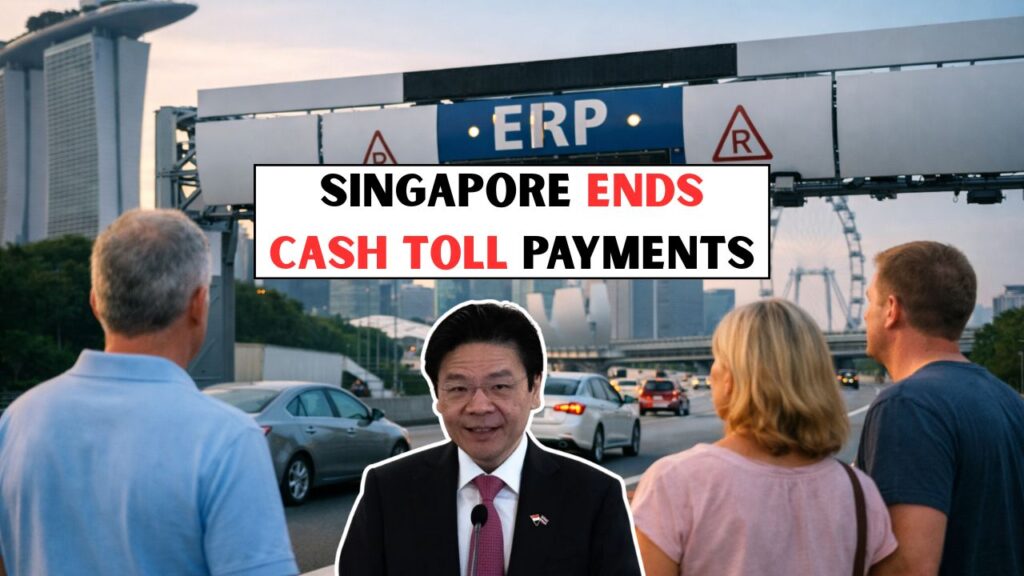
Singapore ERP cashless system replaces traditional toll payments
The upcoming ERP change removes the option of paying toll charges with cash at gantries, pushing Singapore firmly into a fully digital road-pricing era. Under the new system, charges are calculated automatically as vehicles pass through ERP points, with payments deducted digitally. This approach improves traffic flow efficiency by eliminating slowdowns, supports seamless toll collection, and reduces the need for roadside infrastructure. Drivers will rely on updated onboard units linked to payment methods, ensuring automatic charge deduction. The goal is to create smoother peak travel while maintaining fairness in how congestion pricing is applied across different locations.
New ERP charges in Singapore begin on 8 January 2026
From 8 January 2026, Singapore’s revised ERP charges will officially apply, and all motorists must be ready for the change. The updated system allows authorities to adjust pricing more dynamically based on real-time conditions, rather than fixed time blocks. This enables dynamic congestion pricing that reflects actual road usage. For drivers, it introduces real-time charging accuracy and clearer accountability for road use. Authorities expect the system to encourage smarter travel planning, helping commuters choose alternative routes or travel times and supporting balanced road demand across the network.
 CPF Bonus News: Singapore Workers Get Extra $5,000 Retirement Boost Starting 8 January 2026
How Singapore drivers should prepare for ERP payment changes
Motorists are encouraged to prepare early to avoid disruptions once the cashless ERP system goes live. Ensuring vehicles are fitted with compatible units and linked payment methods is essential for uninterrupted toll payments. Drivers should also familiarise themselves with how charges are displayed and tracked, promoting better cost awareness. The transition offers greater payment transparency, allowing users to review charges easily. Over time, this system supports long-term traffic management goals by nudging drivers toward informed decisions that benefit both individual commuters and overall road efficiency.
What Singapore’s move to cashless ERP means overall
The shift away from cash toll payments represents more than a technical upgrade; it signals a broader evolution in how Singapore manages urban mobility. By combining technology with pricing strategies, the system aims to reduce congestion without expanding road space. Drivers gain clearer usage tracking and fewer delays at gantries, while authorities benefit from data-driven planning. Over time, this approach encourages more efficient commuting habits and supports sustainable transport goals, reinforcing Singapore’s reputation as a forward-thinking, digitally enabled city.
| Item | Key Information |
|---|---|
| System Start Date | 8 January 2026 |
| Cash Payments | Fully discontinued |
| Charging Method | Automatic digital deduction |
| Pricing Model | Dynamic, traffic-based |
| Driver Requirement | Compatible onboard unit |
Frequently Asked Questions (FAQs)
1. When do the new ERP charges start?
The new ERP system and charges take effect from 8 January 2026.
 Singapore Parents to Receive $1,000 Child Grant From 8 January 2026 — Eligibility Explained
2. Can drivers still pay ERP charges with cash?
No, all cash payments are removed under the new ERP system.
3. How are ERP charges calculated under the new system?
Charges are calculated automatically based on real-time road usage and conditions.
4. What must drivers do to prepare?
Drivers need a compatible onboard unit linked to a valid digital payment method.