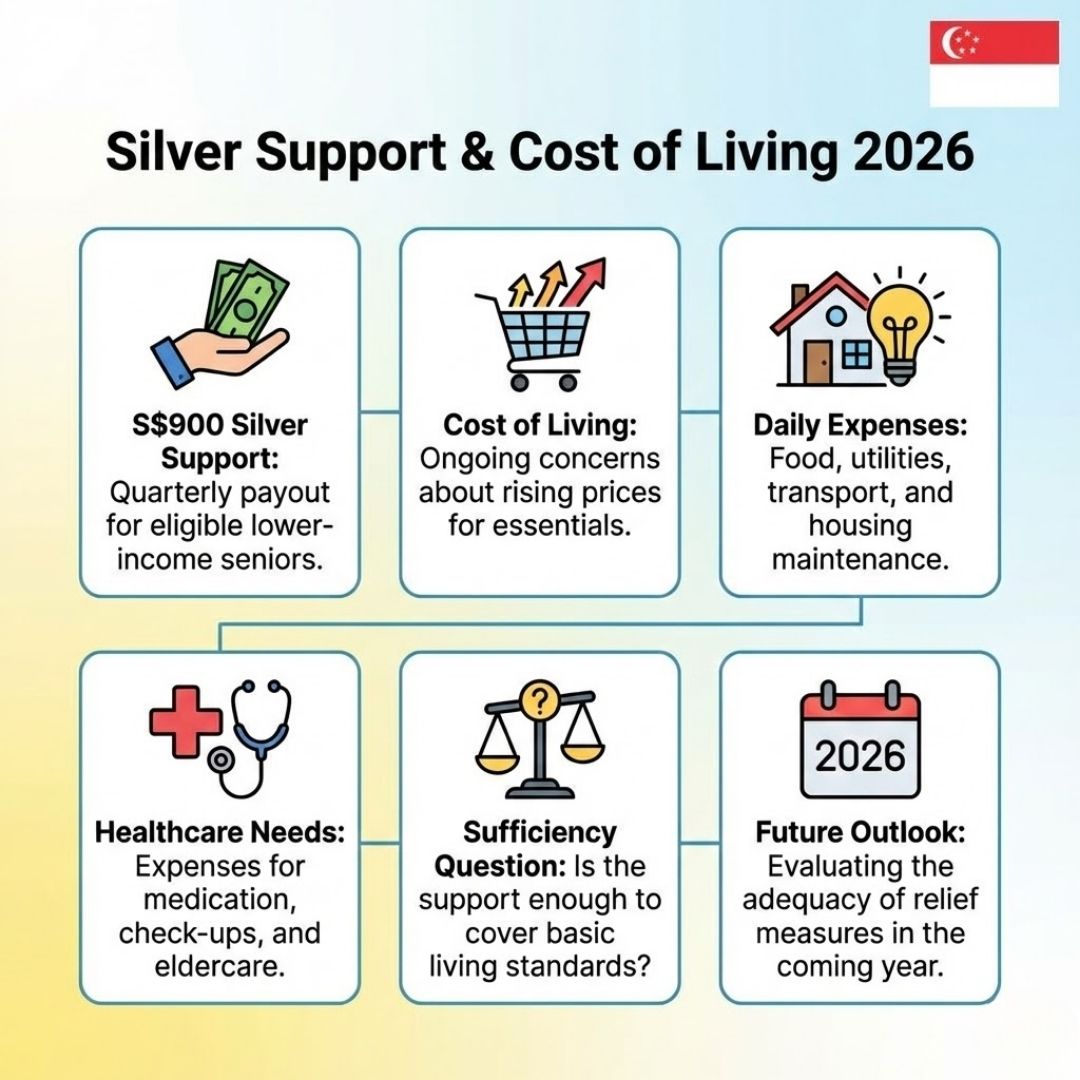
As living costs continue to rise, many older citizens in Singapore are openly questioning whether existing support schemes are keeping pace with daily expenses. The Silver Support Scheme, designed to provide additional income to lower-income seniors, has become a focal point of discussion heading into 2026. With food prices, healthcare bills, and utilities steadily climbing, seniors and their families are reassessing whether current payouts offer real relief or simply temporary breathing room. This renewed debate reflects broader concerns about long-term financial security for Singapore’s ageing population.

Silver Support adequacy concerns grow among seniors
Across neighbourhoods and senior activity centres, conversations increasingly centre on whether Silver Support is enough to meet modern needs. Many beneficiaries appreciate the help but admit it barely stretches across monthly essentials. Rising grocery bills, transport costs, and medical expenses mean the scheme often feels like short-term relief rather than a solution. Seniors worry about monthly cash strain and how long savings can last. For those without family backing, the pressure of everyday expenses is real, making the question of adequate retirement support more urgent than ever.
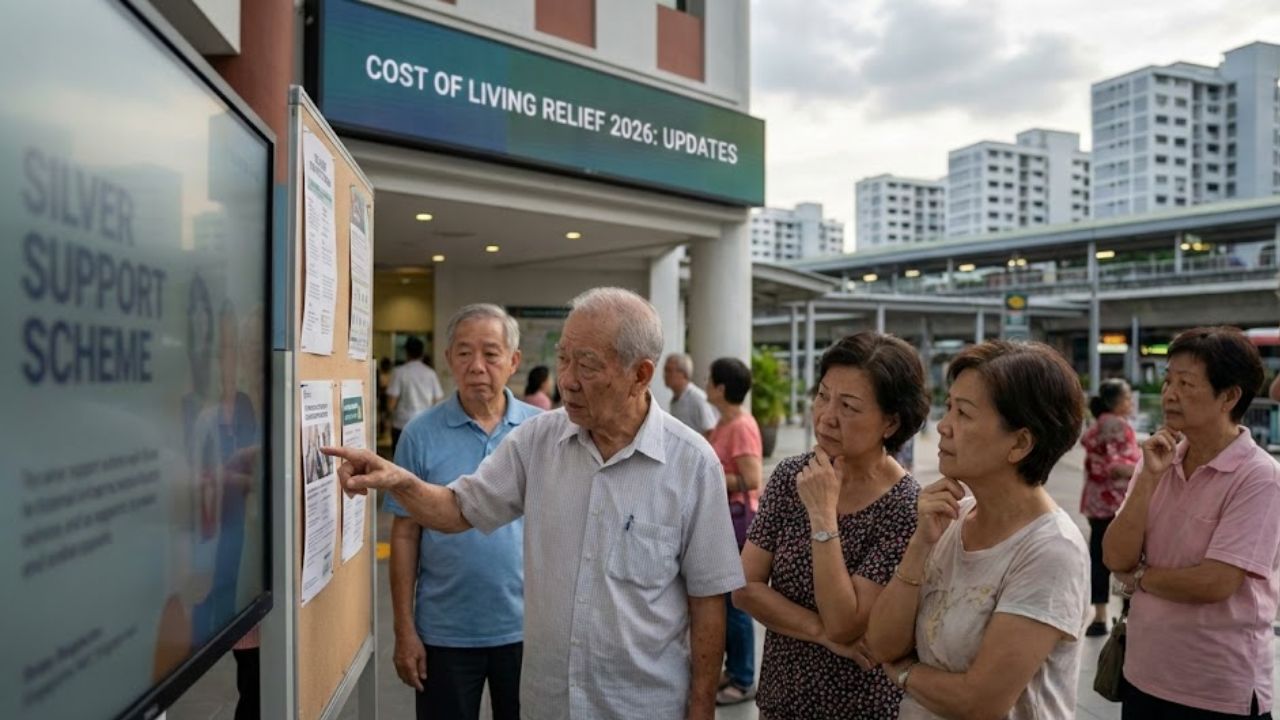
Cost of living pressures test Singapore senior benefits
Singapore’s cost of living has changed significantly over the past few years, and seniors feel the impact most sharply. While Silver Support helps supplement income, it competes against inflation in healthcare, housing maintenance, and daily necessities. Some seniors report cutting back on social activities or delaying non-urgent care due to rising medical costs. Others highlight inflation-linked challenges that fixed payouts struggle to address. The debate now focuses on whether benefits should better reflect current price realities and offer more stable financial cushioning for ageing households.
 Goodbye to Confusion Over GST Vouchers as S$850 Payments Roll Out Across Singapore in 2026
2026 outlook raises questions on Silver Support sustainability
Looking ahead to 2026, policymakers and seniors alike are evaluating how sustainable the Silver Support framework truly is. With an ageing population and longer life expectancy, the need for dependable assistance grows. Seniors are asking if future adjustments will consider longer retirement years and evolving needs. Discussions increasingly reference future income security, policy review expectations, and the importance of predictable support levels. Without timely updates, concerns may deepen about whether the scheme can remain fit for purpose in the years ahead.
Summary and outlook for Singapore seniors
The ongoing debate around Silver Support highlights a broader reflection on how Singapore supports its elderly citizens. While the scheme offers meaningful help, many seniors feel it must evolve alongside economic realities. Addressing long-term affordability and ensuring balanced social support will be key to maintaining confidence. Clear communication, periodic reviews, and responsiveness to feedback can strengthen trust. Ultimately, ensuring dignity and stability in later life depends on aligning assistance with real-world needs, not just historical benchmarks.
| Aspect | Details | Notes |
|---|---|---|
| Target Group | Lower-income seniors | Citizens aged 65+ |
| Payment Frequency | Quarterly | Automatic disbursement |
| Support Purpose | Income supplementation | Not a full pension |
| Key Concern | Cost of living impact | Inflation pressure |
| 2026 Focus | Adequacy review | Policy discussions ongoing |
Frequently Asked Questions (FAQs)
1. Who receives Silver Support in Singapore?
It is paid to eligible lower-income Singaporean seniors aged 65 and above.

2. Is Silver Support meant to cover all living costs?
No, it supplements income and is not designed as a full retirement pension.
3. Why are seniors questioning Silver Support in 2026?
Rising living costs have raised doubts about whether payouts remain sufficient.
4. Will Silver Support amounts change in the future?
Adjustments may occur as policies are reviewed, but no changes are guaranteed.