Singapore is preparing for a major shift in its foreign workforce framework as long-standing work permit rules make way for new wage insurance and penalty measures in 2026. These changes aim to balance business needs with stronger worker protection while reinforcing fair employment standards across the country. For employers and migrant workers alike, the updates signal a more structured and accountable system. From enhanced income safeguards to tougher enforcement, Singapore’s updated approach reflects evolving economic realities and its commitment to sustainable workforce management.

Singapore Work Permit Changes Bring Wage Insurance Focus
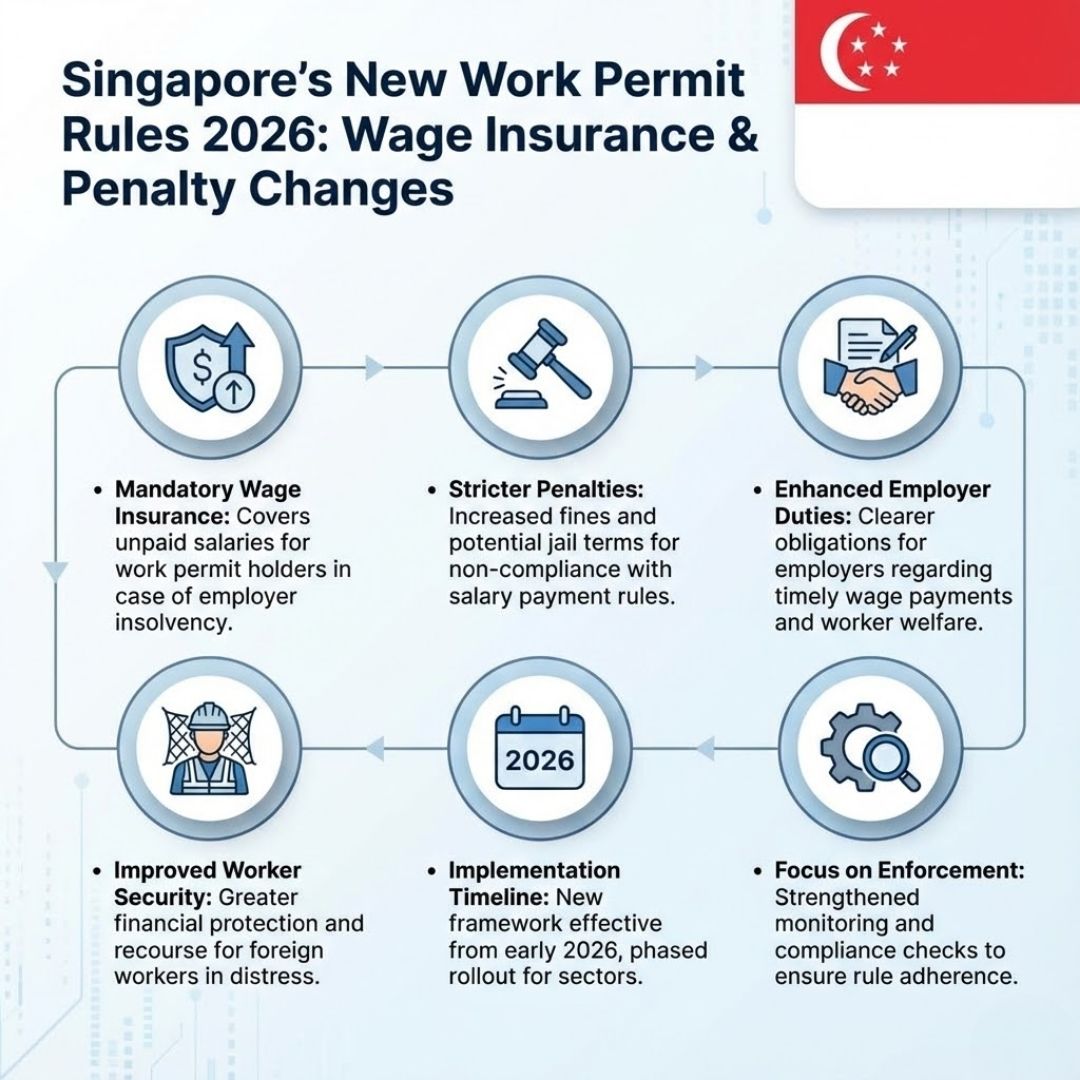
The new Singapore work permit changes place wage protection at the center of workforce policy. Under the updated framework, employers will be required to ensure a minimum income safety net for eligible foreign workers, reducing the risk of sudden income loss. This move supports worker financial stability while encouraging responsible hiring practices. For businesses, it means clearer obligations and fewer grey areas around pay disputes. Authorities believe the reform will also strengthen employer accountability rules, ensuring salaries are paid fairly and on time. Overall, the wage insurance model promotes long-term workforce trust and aligns Singapore with global best practices.

New Wage Insurance Rules for Foreign Workers in Singapore
The introduction of wage insurance rules is designed to protect foreign employees during unexpected disruptions such as contract termination or business closures. Eligible workers may receive temporary support through insured wage coverage, helping them manage daily expenses while seeking new opportunities. This approach reduces reliance on emergency aid and promotes responsible employment transitions. Employers benefit too, as the system offers clearer guidelines and reduces disputes. By linking insurance requirements to permits, Singapore strengthens fair labour safeguards and ensures that growth does not come at the expense of worker security.

Stricter Penalty Updates Under Singapore Employment Laws
Alongside wage insurance, Singapore is introducing tougher penalties for non-compliance. Employers who violate rules may face higher financial fines, permit restrictions, or hiring bans. These measures are meant to deter repeat offenses and reinforce compliance-driven hiring. The updated penalties also improve transparency, making enforcement more predictable for businesses. For workers, stricter rules translate into stronger legal protection and fewer cases of exploitation. Authorities emphasize that consistent enforcement will create a level playing field across industries.
Summary and Impact Analysis
Overall, Singapore’s 2026 reforms mark a significant evolution in work permit governance. By combining wage insurance with tougher penalties, the system balances protection and responsibility. Employers gain clarity, while workers benefit from improved income security and clearer rights. The changes also signal a broader policy goal of sustainable growth through ethical workforce management. As businesses adapt, the reforms are expected to strengthen trust, reduce disputes, and support Singapore’s reputation as a fair and competitive employment hub.
| Policy Area | Old Rules | New 2026 Update |
|---|---|---|
| Wage Protection | Limited safeguards | Mandatory wage insurance |
| Employer Compliance | Basic penalties | Stricter enforcement measures |
| Worker Support | Ad-hoc assistance | Structured income coverage |
| Penalty Severity | Lower fines | Higher fines and bans |
Frequently Asked Questions (FAQs)
1. When do the new Singapore work permit rules start?
The updated wage insurance and penalty rules are scheduled to take effect in 2026.

2. Who benefits from wage insurance in Singapore?
Eligible foreign workers under the work permit system will benefit from the new coverage.
3. What happens if employers break the new rules?
They may face higher fines, permit restrictions, or hiring bans.
4. Do these changes affect all industries?
Yes, the reforms apply broadly across sectors employing work permit holders.