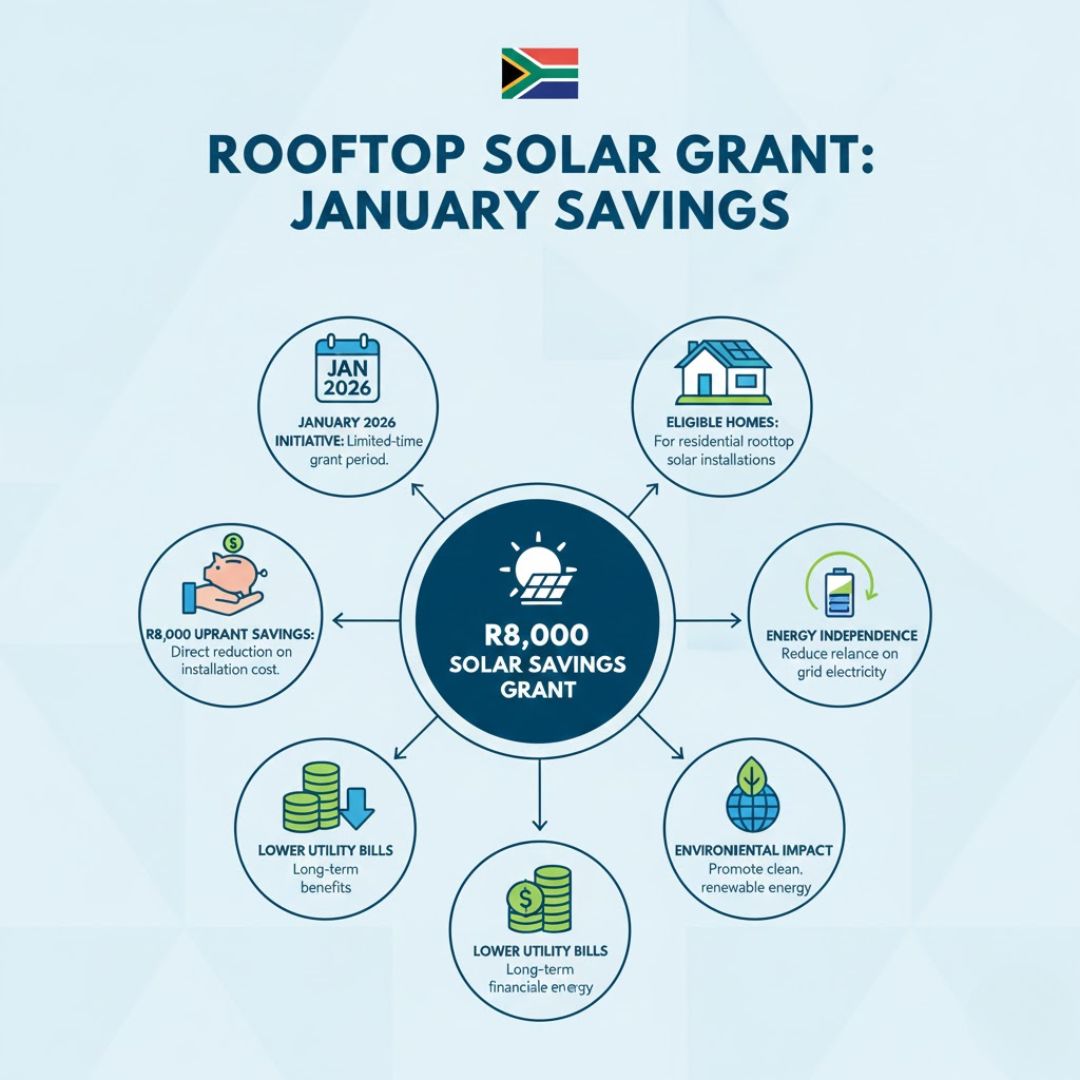
As South Africans continue to grapple with rising electricity prices and ongoing power outages, the January Solar Grant emerges as a timely relief for homeowners planning to shift toward renewable energy. This initiative offers savings of up to R8,000 on rooftop solar installations, helping make solar power more affordable for ordinary households. By taking advantage of this grant, homeowners can lower their monthly electricity expenses, secure a more reliable power supply, and actively support environmental sustainability. The programme is designed to accelerate solar adoption, reduce carbon emissions, and support South Africa’s long-term energy transition.

Understanding the January Solar Grant Initiative
The January Solar Grant is a government-supported programme created to encourage widespread installation of rooftop solar systems across South Africa. Given the country’s high solar potential, renewable energy presents a practical and sustainable solution to ongoing energy challenges. The grant eases the financial burden of upfront installation costs, enabling more households to participate in the clean energy transition. By reducing dependence on coal-based electricity, this initiative supports national goals to expand renewable energy capacity by 2030.
– Homeowners must apply through certified and approved solar installers.

– The grant subsidises installation costs up to a maximum of R8,000.
– Applicants must submit proof of home ownership and electricity usage.
– Only systems installed by approved providers qualify.
– Funding is limited and processed on a first-come, first-served basis.
– All installations must meet regulatory standards.
– Rebates are paid within six months after installation verification.
– The grant is time-limited, encouraging early applications.
Benefits of Rooftop Solar Systems in South Africa
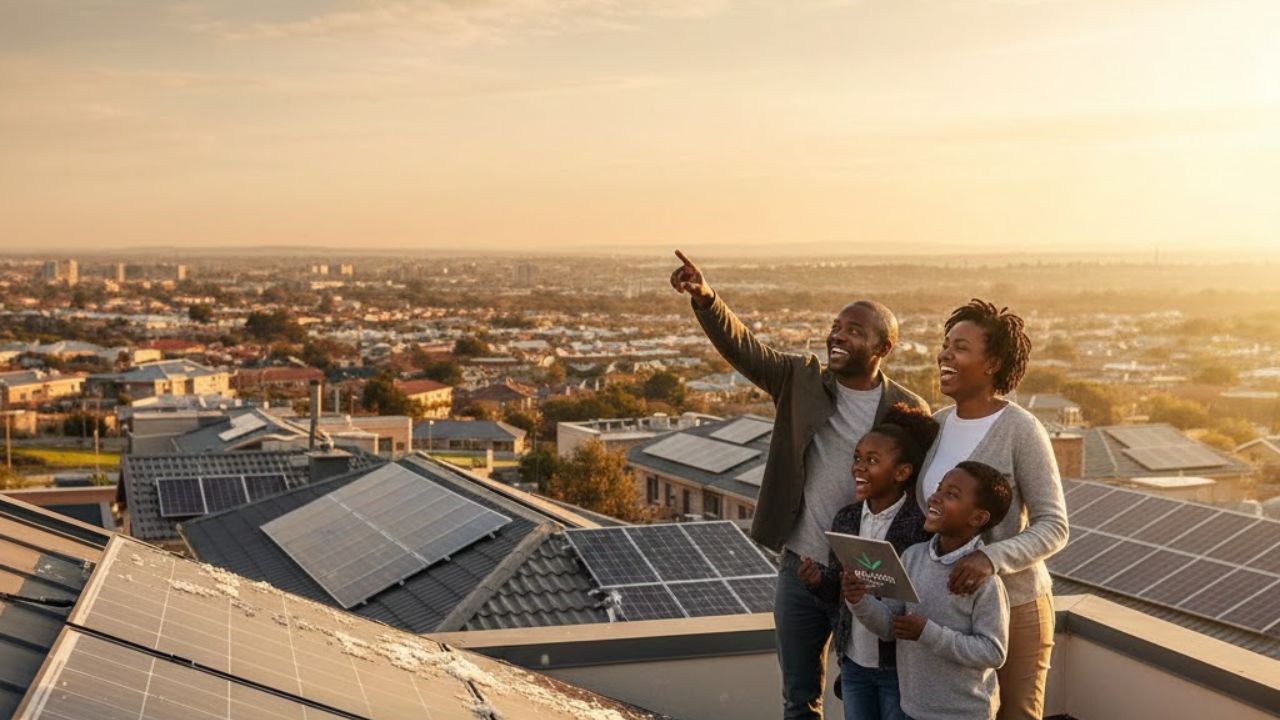
Rooftop solar installations provide multiple advantages for South African households. The most immediate benefit is a noticeable reduction in electricity bills, offering long-term cost savings. Solar systems also provide energy independence during load-shedding and power disruptions. Beyond financial benefits, solar installations can increase property value and appeal to future buyers. Environmentally, solar power helps reduce greenhouse gas emissions, making it a responsible energy choice. Thanks to South Africa’s sunny climate, solar panels operate efficiently and deliver strong energy output.
| Benefit | Description | Impact | Example |
|---|---|---|---|
| Cost Savings | Lowers monthly electricity expenses | High | R500 saved per month |
| Energy Security | Stable and reliable power supply | Medium | No load-shedding impact |
| Property Value | Improves home resale value | Medium | Approx. 5% increase |
| Environmental Impact | Reduces carbon emissions | High | 1 ton CO₂ reduction annually |
| Efficiency | High energy production output | High | Peak solar performance |
| Renewable Energy | Supports sustainable power generation | High | Cleaner energy future |
Steps to Apply for the January Solar Grant
The application process for the January Solar Grant is simple when the correct steps are followed. Homeowners should first select an approved solar installer participating in the programme. Required documents, including proof of residence, identification, and a recent electricity bill, must then be submitted. Once the application is reviewed and approved, installation can proceed. After verification, the rebate is issued, ensuring that systems meet safety and quality standards.
Key Considerations for Solar Panel Installations
Before installing solar panels, homeowners should evaluate several critical factors to ensure optimal performance. Roof structure, orientation, tilt angle, and shading can all affect energy generation. Selecting reliable panels and inverters is essential for efficiency and durability. Working with experienced, certified installers helps ensure compliance and system longevity. Understanding maintenance needs and estimated savings allows homeowners to make informed investment decisions.
– Inspect roof condition and solar suitability.

– Ensure correct panel angle and orientation.
– Select durable, high-quality solar equipment.
– Use certified and experienced installers.
– Review warranties and maintenance requirements.
– Estimate long-term savings before installation.
How Solar Energy Supports South Africa’s Energy Goals
– Reduces dependency on fossil fuel-based electricity.
– Encourages sustainable and clean energy development.
– Improves national energy reliability.
– Creates employment opportunities in renewable sectors.
– Enhances energy efficiency while lowering emissions.
Exploring Financial Options for Solar Panel Installation
Although the January Solar Grant significantly lowers installation costs, some homeowners may still require additional funding. Several financing options are available, including green loans, leasing arrangements, and flexible payment plans. Green loans offer favourable interest rates for environmentally friendly projects. Leasing allows access to solar systems without upfront investment, while payment plans spread costs over time. These options make solar power more financially accessible across income groups.
| Option | Description | Pros | Cons |
|---|---|---|---|
| Green Loans | Low-interest eco-focused loans | Affordable rates, flexible terms | Credit approval required |
| Leasing | Monthly rental of solar equipment | No upfront cost | Ongoing monthly fees |
| Payment Plans | Installment-based cost distribution | Budget-friendly payments | Higher overall cost |
| Personal Savings | Direct self-funded investment | No interest, full ownership | Immediate cash requirement |
| Government Rebates | Post-installation rebate benefits | Lower net expense | Initial full payment needed |
Future of Solar Energy in South Africa
Solar energy is expected to become a cornerstone of South Africa’s sustainable energy future. With abundant sunlight and increasing government support, solar adoption is set to accelerate nationwide. Programmes like the January Solar Grant play a key role in driving this transition. As more households and businesses invest in solar power, the collective impact will strengthen energy security, reduce emissions, and stimulate economic growth through renewable energy job creation.