South Africa will introduce stricter road safety regulations in December 2025. The new rules will impose a R500 fine on anyone caught traveling in a vehicle without wearing a seatbelt. This change is part of a national effort to reduce the number of injuries and deaths caused by road accidents by ensuring that all vehicle occupants use proper safety restraints during every journey. The government has decided to take this step after reviewing accident statistics that show many casualties could have been prevented if passengers had been wearing seatbelts. Transport officials believe that enforcing this requirement more strictly will encourage better safety habits among drivers and passengers alike. The fine applies to all occupants in a vehicle regardless of where they are seated. Authorities plan to conduct regular checks on major roads and highways to ensure compliance with the new regulation. Law enforcement officers will have the authority to stop vehicles and issue fines on the spot to anyone found not wearing a seatbelt. The government hopes that this measure will create a culture of safety consciousness among road users and ultimately save lives. This initiative is part of a broader strategy to improve road safety across the country. Officials have noted that South Africa has one of the highest rates of road fatalities in the world and that immediate action is necessary to address this serious problem. The seatbelt fine is just one of several measures being considered to make roads safer for everyone.

December 2025 Seatbelt Law Update: Revised Fines and Enforcement Rules
From December 2025, every person travelling in a vehicle across South Africa will be legally required to wear a seatbelt, no matter where they are seated. This updated regulation applies to private cars as well as public transport, including taxis, minibuses, and buses. Traffic authorities have confirmed that enforcement will be stricter, with roadside checks increasing nationwide. Anyone caught without a seatbelt will face an immediate fine of R500, issued on the spot.

How the Mandatory Seatbelt Rule Changes Daily Driving in South Africa
The revised law makes seatbelt use compulsory for all occupants, eliminating previous loopholes related to seating position. Front-seat and back-seat passengers are treated equally under the regulation. Public transport users are no longer exempt, meaning taxi and minibus passengers must also comply. This change is expected to significantly alter daily travel habits, particularly for short-distance trips where seatbelt use was often ignored.
 SASSA Grant Holders Set for January-February Boost: Early Deposits and Bonus Payments Announced
Government’s Reasoning Behind the New R500 Seatbelt Fine
The government introduced the stricter fine in response to rising road accident fatalities. Research shows that wearing a seatbelt greatly reduces the risk of serious injury or death during collisions. By enforcing a standard penalty nationwide, authorities aim to promote consistent compliance and encourage safer road behaviour. The R500 fine is designed to act as a strong deterrent without ambiguity.
Drivers, Passengers, and Vehicle Types Covered Under the Law
The law applies to drivers and passengers in all vehicle categories, including private cars, taxis, minibuses, and buses. Both front and rear seat occupants must buckle up before the vehicle moves. Parents and guardians travelling with children are also required to use approved child restraint systems in line with existing child safety regulations. The responsibility for compliance rests with every individual occupant.
Repeat Offences: Escalating Penalties and Legal Consequences
Motorists and passengers who repeatedly ignore the seatbelt requirement may face increased fines or additional legal consequences. Failure to pay the initial R500 fine within the specified period can result in added penalties and administrative charges. Authorities have indicated that repeat violations will be monitored closely to ensure long-term adherence to road safety laws.
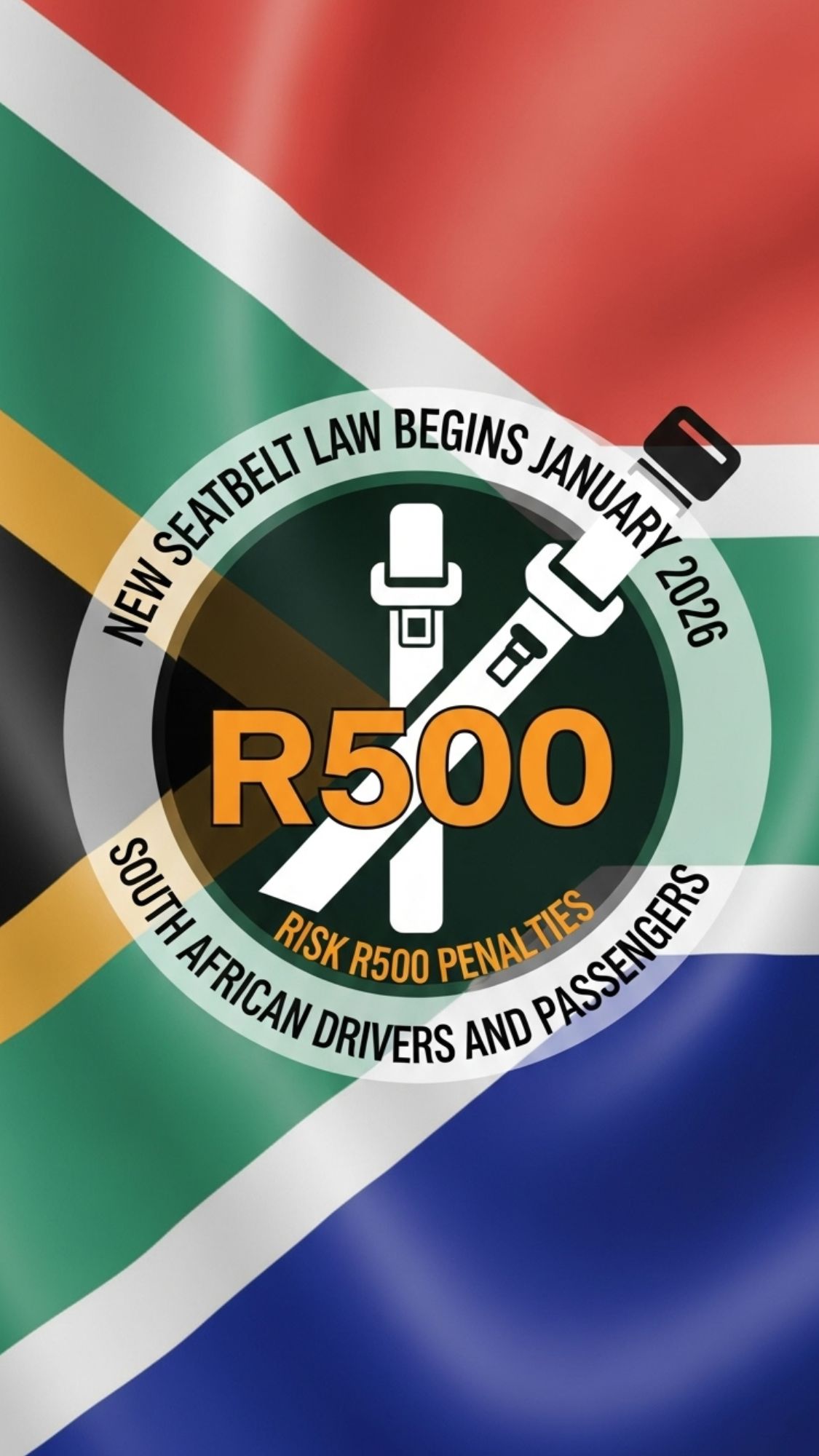
Essential Seatbelt Compliance Facts Every Road User Must Know
Wearing a seatbelt is compulsory for all vehicle occupants, regardless of seating position.

Failure to comply with the rule will result in an immediate fine of R500.
The regulation comes into force from December 2025.
The law applies to private vehicles and all forms of public transport.
Repeated violations may lead to higher penalties or further legal action.