GEPF Retirement Age Changes for South Africa’s Public Sector The Government Employees Pension Fund has made an important announcement that will affect public sector workers across South Africa. Starting from 15 January 2026 the retirement age will increase to 67 years old. This decision will impact thousands of government employees who will need to adjust their retirement plans and career expectations accordingly. As Africa’s largest pension fund GEPF made this decision based on changing population patterns & economic factors. The main goal is to respond to the fact that people are living longer & to make sure pension payments remain viable for future generations. Public sector workers will now have the opportunity to work longer which may also require them to rethink their financial strategies. This change brings South Africa more in line with retirement age trends seen in other countries around the world. The extended working period could provide both advantages & challenges for government employees. Some may welcome the chance to continue earning and building their pension benefits while others may need to reconsider their long-term plans.

Overview of GEPF’s Revised Retirement Age Policy
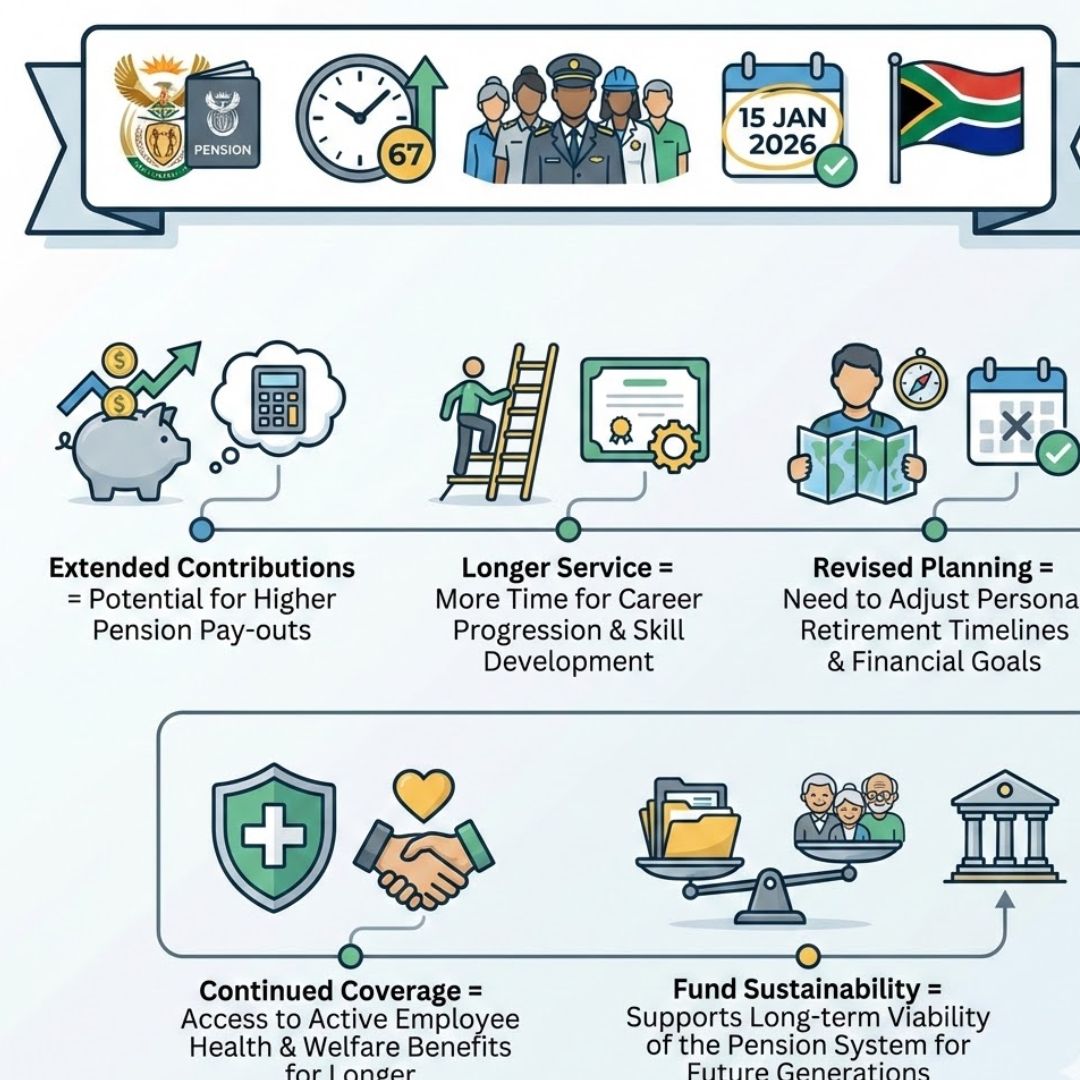
As South Africa navigates ongoing demographic changes and economic pressures, the Government Employees Pension Fund (GEPF) has introduced a revised retirement age of 67. This decision mirrors global developments, where many nations are extending working lives to reflect longer life expectancy and to protect the long-term stability of pension systems. For public sector employees, the update means remaining in employment for additional years, allowing more time to strengthen pension contributions and work toward a more secure retirement. The adjustment reflects national longevity trends while addressing increasing financial demands on pension funds.
– Supports the sustainability of the pension fund amid rising financial obligations.

– Gives employees extra years to build and strengthen savings.
– Extended service may result in higher pension benefits at retirement.
– Brings South Africa closer to international retirement age benchmarks.
– Helps cushion pension systems against economic uncertainty.
– Responds directly to economic and demographic pressures.

What the Retirement Age Change Means for Public Sector Workers
The updated retirement age carries several implications for public sector employees in South Africa. Professionally, the extension offers more time to pursue advancement, potentially leading to higher-ranking roles and improved earnings over the long term. At the same time, employees are encouraged to reassess their long-term financial planning to ensure it aligns with the revised timeline. Adjusting career expectations and retirement strategies will be essential as workers adapt to this extended phase of employment.
| Current Age (Years) | Revised Retirement Age | Additional Working Years |
|---|---|---|
| 60 | 67 | 7 Years Extension |
| 61 | 67 | 6 Years Extension |
| 62 | 67 | 5 Years Extension |
| 63 | 67 | 4 Years Extension |
| 64 | 67 | 3 Years Extension |
| 65 | 67 | 2 Years Extension |
| 66 | 67 | 1 Year Extension |
Preparing for a Longer Working Life
With retirement now occurring later, early and thoughtful preparation becomes increasingly important. Sound financial planning helps ensure stability and comfort after leaving the workforce. Employees are advised to carefully review their current situation and make informed adjustments where necessary to stay on track for retirement goals.
Reviewing and Strengthening Financial Plans
Employees should begin by reassessing their financial objectives and evaluating existing pension contributions. This process helps confirm whether current savings levels are sufficient for future needs. Where possible, increasing contributions can have a meaningful effect on final pension outcomes.
– Consult a financial advisor for tailored guidance.
– Look into additional savings and investment options.
– Review pension fund performance and adjust contributions if needed.
– Explore alternative income sources to support retirement.
Making the Most of Career Development Opportunities
The added years in the workforce create opportunities for career growth and skill development. By pursuing further education or professional training, employees can improve their marketability, potentially leading to higher salaries and increased pension benefits over time.
 New seatbelt law begins January 2026 — South African drivers and passengers risk R500 penalties
| Age Bracket | Average Salary Increase | Potential Pension Impact | Opportunities |
|---|---|---|---|
| 60-62 | 5% | Moderate | Upskill |
| 63-65 | 7% | High | Leadership roles |
| 66-67 | 10% | Significant | Mentorship |
| 68+ | N/A | Retired | Consultancy |
Global Perspective on Rising Retirement Ages
South Africa’s decision reflects a broader international trend. Countries such as Germany, the United Kingdom, and the United States have already implemented or are considering similar increases. These measures are driven by the need for fiscal responsibility and the realities of aging populations. Aligning with these practices highlights a proactive approach to managing public sector pension sustainability.
Key Drivers Behind Retirement Age Adjustments
– Longer life expectancy requiring extended working years.
– The need to maintain financially viable pension systems.
– Economic challenges demanding resilient retirement funds.
– Demographic shifts leading to more retirees drawing benefits.
Strategies for Managing Career Longevity
As careers extend, maintaining health, motivation, and skills becomes essential. Lifelong learning, attention to physical and mental well-being, and openness to change support continued professional satisfaction and growth throughout longer working lives.
Staying Motivated Over the Long Term
– Set new career goals on a regular basis.
– Participate actively in professional networks.
– Engage in mentorship as both mentor and mentee.
– Maintain a healthy work-life balance to prevent burnout.
– Remain adaptable and embrace new technologies.
– Explore local municipality support schemes.
– Adopt energy-saving practices.
– Consider participation in community solar projects.