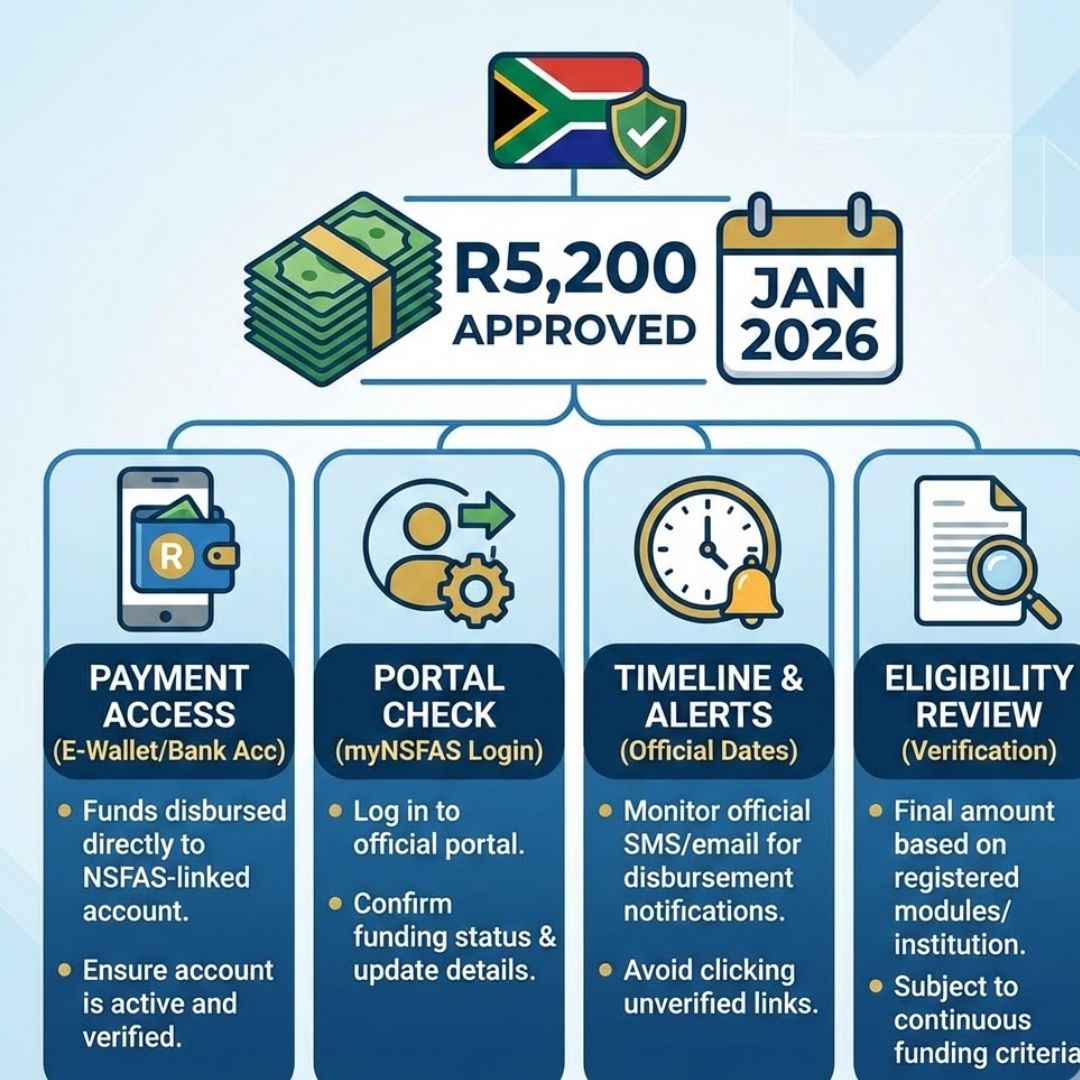
The National Student Financial Aid Scheme (NSFAS) has confirmed that the R5200 allowance for January has been approved. This brings important financial support to students throughout South Africa. Many young people depend on NSFAS to help them pay for their higher education. Knowing how to get these funds quickly matters a lot for students who are struggling with money. This article explains the steps you need to follow to receive your NSFAS allowance without delays. We will also look at who qualifies for the funding and discuss the application process along with problems that students sometimes encounter. Students should make sure their banking details are correct and up to date in the NSFAS system. Any mistakes in your account information can cause payment delays.

How to Make Sure You Get Your NSFAS Allowance in January
To receive your NSFAS January allowance without delays, students must follow a few essential steps. The first priority is confirming your banking details with NSFAS. All information must be accurate and current, as even small errors can cause payment disruptions. Students should also log in to the NSFAS portal regularly to check for updates, messages, or changes to their allowance status.
It is equally important to meet all the terms of your NSFAS funding agreement. This includes maintaining the required academic performance and complying with institutional conditions. Not meeting these requirements may result in payments being delayed or stopped. Keeping supporting documents well organised ensures quick verification if requested.

| Step | Required Task | Expected Result | Important Notes |
|---|---|---|---|
| 1 | Verify bank account information | Correct and up-to-date records | Update details if there are any changes |
| 2 | Fulfil academic criteria | Continued eligibility status | Follow rules set by your institution |
| 3 | Check the online portal regularly | Receive timely updates | Monitor notifications and alerts |
Eligibility Requirements for the NSFAS January Payment
Knowing whether you qualify for the NSFAS January allowance is essential. NSFAS is designed to support South African students from financially disadvantaged households. Funding is mainly provided to those studying at public universities and TVET colleges, helping promote fair access to higher education.
The main eligibility requirements include the following:
– South African citizenship
– Registration at a recognised public university or TVET college
– Proof of financial need based on household income
– Meeting academic performance standards
– Submission of all required documents
How to Apply for the NSFAS January Allowance
The NSFAS application process is simple when the correct steps are followed. Students must begin by registering on the NSFAS portal. After registration, the application form should be completed carefully, ensuring all information is correct.
The final step involves uploading the necessary supporting documents. Once submitted, students should monitor their application status through the portal to ensure there are no outstanding requirements.

| Stage | Details | Action Required |
|---|---|---|
| 1 | Register on NSFAS portal | Create an account |
| 2 | Complete application form | Provide accurate information |
| 3 | Upload documentation | Submit all required documents |
Common NSFAS Allowance Problems and How to Fix Them
Many students experience delays due to common NSFAS-related issues. These challenges often include incorrect banking information, academic eligibility concerns, or missing documentation, all of which can affect payment timelines.
– Incorrect Banking Details: Review and update your information on the NSFAS portal if needed.
– Academic Requirements Not Met: Speak with your institution to understand expectations and seek academic support.
– Pending Documents: Upload all documents correctly and contact NSFAS if verification is delayed.

Smart Ways to Manage Your NSFAS Allowance
Proper planning helps ensure your NSFAS allowance lasts throughout the month. Effective management allows students to cover both academic and living expenses without unnecessary stress.
– Budget wisely for accommodation, food, and transport
– Save for emergencies whenever possible
– Track your spending to avoid overspending
– Prioritise educational costs such as books and study materials
Community support may also be available, as local organisations sometimes provide additional assistance to students in need.