Getting financial aid from the government can feel overwhelming for many people. South African families who take care of foster children can receive help through the R1250 Foster Grant that is available this January. This grant gives important support to families who are raising foster children and helps them create a stable home. This guide explains how to apply for the grant in simple steps. The information will help both new applicants and people who need to renew their grant. When you know what documents you need & follow the right steps you can get the financial help your family needs without confusion. The application process becomes much easier when you understand the basic requirements. Taking time to prepare your paperwork and following each step carefully will help ensure your application gets approved. This money makes a real difference for families who are providing care for foster children in their homes.

R1,250 Foster Grant: Eligibility Requirements Explained
Before submitting an application for the R1,250 Foster Grant, it is essential to clearly understand the eligibility criteria. This grant is intended for individuals who are legally responsible for a foster child under a formal care arrangement. Eligibility is assessed based on the child’s age, the legal status of the foster placement, and the household’s income details. Applicants must present official documentation confirming foster care, including a court-issued foster care order. The foster child must be under 18 years old and must reside within South Africa. Meeting all conditions ensures that the grant reaches caregivers who genuinely qualify for financial assistance.
– Official proof of foster care placement
 R3,500 Boost for Young Jobseekers: Discover If You Qualify for SASSA's Major Support Program!
– Child must be younger than 18 years
– Residency in South Africa is mandatory
– Household income verification
– Valid identification documents for both caregiver and child

How to Apply for the R1,250 Foster Grant
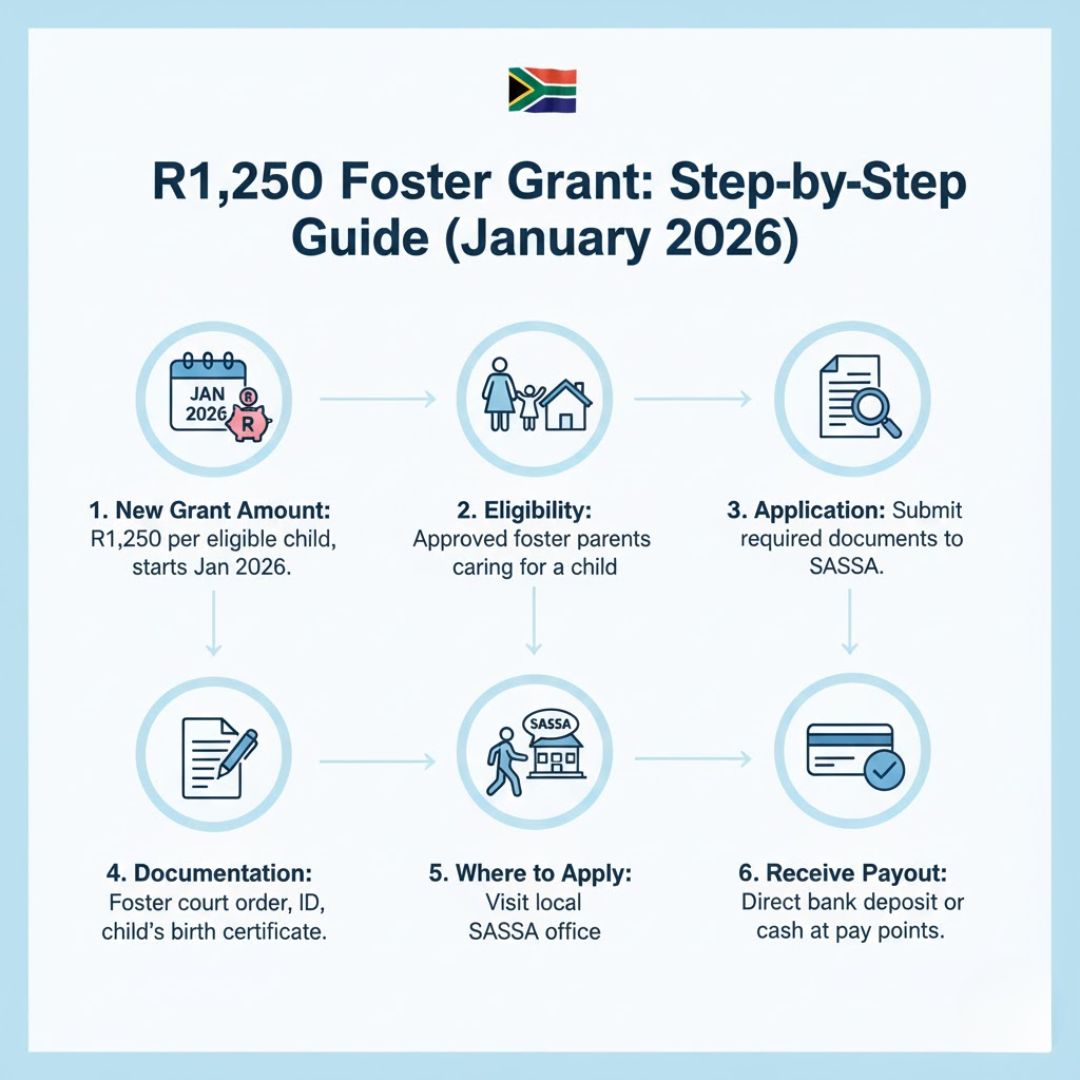
The application process for the R1,250 Foster Grant follows a structured set of steps. Begin by collecting all required documents, such as the child’s birth certificate, your South African ID, and the court order confirming foster care status. Once ready, complete the official application form available at any SASSA office. After filling in the details accurately, submit the form together with all supporting documents, either in person or via the SASSA online platform. The application will then be reviewed, and additional verification may be requested. Once approved, the grant is paid monthly to support the foster child.
– Gather all required documentation
– Complete the official application form
– Submit documents to SASSA
– Await review and approval
– Receive monthly foster grant payments
| Application Tip | Rewritten Guidance | Key Advantage |
|---|---|---|
| Plan Ahead | Collect and organize all required documents early | Reduces last-minute pressure |
| Provide Correct Details | Double-check every detail before submitting the application | Helps avoid unnecessary processing delays |
| Track Progress | Regularly monitor the status of your submitted application | Ensures timely updates and quick action if needed |
Key Application Advice and Common Challenges
Applicants for the R1,250 Foster Grant may face challenges during the application process. These often include missing paperwork, incorrect information, or processing delays. To reduce complications, applicants should carefully review all details before submission and ensure that documents are current and complete. Maintaining clear communication with SASSA officials can also help resolve delays. If processing takes longer than expected, contacting SASSA directly may assist in clarifying the status of your application and moving it forward efficiently.
 Singapore Confirms $2,800 Annual Pension Support for Low-Income Seniors From 8 January 2026
Common Challenges Experienced by Applicants
– Incomplete or missing documents
– Errors in application form details
– Delays in processing timelines
– Communication gaps with SASSA
– Technical problems with online submissions
Practical Solutions to Avoid Delays
– Confirm document completeness before submission
– Double-check application information
– Follow up with SASSA regularly
– Request help for online application issues
Why the Foster Grant Is Vital in South Africa
The R1,250 Foster Grant plays a significant role in supporting families across South Africa who care for foster children. This financial assistance helps cover essential daily needs such as food, clothing, and education, which are crucial for a child’s growth and stability. By reducing financial pressure, caregivers are better able to provide a safe, nurturing environment. The grant directly supports the well-being of vulnerable children and strengthens the foster care system by ensuring consistent support for those entrusted with their care.
How to Access the R5,200 Grant Faster Through NSFAS Appeals
Thousands of students waiting on NSFAS appeal outcomes may still qualify for the R5,200 grant by following a faster and more effective approach. Many applicants miss out simply because they are unaware of the correct steps or timelines involved. By understanding how the appeal system works and ensuring all required documents are correctly submitted, eligible students can significantly improve their chances of approval. This streamlined method focuses on reducing delays and helping deserving applicants unlock financial support meant to ease their academic journey.
Why the Foster Grant Plays a Vital Role in Society
The Foster Care Grant is more than just monthly financial assistance. It plays a critical role in strengthening families and communities by supporting children who need stable care. This grant helps caregivers meet essential needs while promoting long-term social development and resilience across households.

| Benefit | Impact |
|---|---|
| Financial Support | Helps ease financial pressure on foster families |
| Child Development | Supports access to education, healthcare, and basic needs |
| Community Stability | Encourages social responsibility and family cohesion |
| Caregiver Empowerment | Enables caregivers to provide consistent and quality care |